
Table of Contents
1. Introduction
In Guatemala, indemnification is an obligation that arises when an indefinite-term employment relationship is terminated without just cause. It is regulated by current labor legislation and is intended to compensate the worker for the time they provided their services. It is important to understand the legal provisions to know if you are entitled to this payment and, if so, what the corresponding amount is.
2. Legal Basis
The legal basis for the calculation of compensation is found in the Labor Code, specifically in the Article 82, which states:
“An employer who dismisses a worker with a permanent contract without just cause, and after more than three months of continuous service, must pay them compensation equivalent to one month's salary for each year of continuous service or the corresponding proportional part.”
This article clarifies that to be eligible for compensation, the worker must have provided their services for more than three consecutive months and the contract must be for an indefinite term.
3. How is compensation calculated in practice?
To determine compensation, the worker's average monthly salary and the total time worked must be taken into account. As a general rule, the payment corresponds to one month's salary for each year worked or the proportional part if the period is less than a full year.
- Base salary or average salaryIf the worker receives a variable salary (from commissions, overtime, or other factors), the average of the last six months is generally used as a reference.
- Time workedIt is calculated in years, months, or days.
4. General formula
One way to mathematically express calculation is:
Indemnification = Monthly Salary × ( (Days of Service / 365) × 12 )
Where
- Monthly salaryis the base salary or the monthly average.
- Days of Service: total number of days the worker has worked continuously.
- 365number of days in a year.
- 12convert to months to equalize the monthly payment.
5. Practical Example
If an employee earns a monthly salary of Q3,000.00 and has worked for 1 year and 6 months (18 months in total):
- 18 months is equivalent to 1.5 years (18 ÷ 12).
- With the simplified formula:
Indemnification = Monthly Salary × ( (Days of Service / 365) × 12 )
This amount corresponds to dismissal without just cause according to Article 82 of the Labor Code.
6. Some important considerations
- Fixed-term contractIf the contract is for a fixed term (e.g., for 6 months or 1 year with an end date), there is no obligation to pay severance pay upon the expiration of said term, unless there are other circumstances that warrant it.
- Justified grounds for dismissalIf the employer demonstrates just cause for dismissal (for example, serious misconduct by the worker), severance pay is not applicable.
- Trial periodThe employee is not entitled to compensation if dismissed before completing three continuous months of employment.
- Payment of other benefitsIn addition to severance pay, the employer must pay other pending benefits (pro-rata vacation, pro-rata Christmas bonus, pro-rata bonus 14, etc.) at the time of termination of employment.
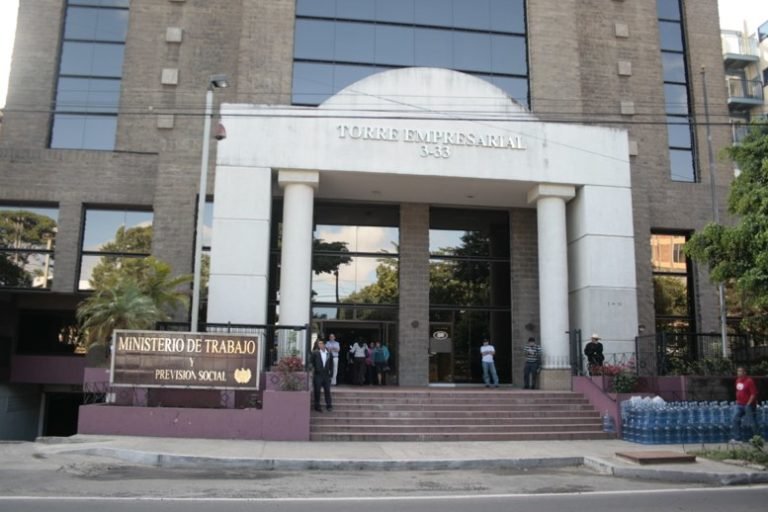
- Legal adviceFor any doubts or disagreements in the calculation of compensation, it is advisable to consult the Ministry of Labor or a lawyer specializing in labor law.
7. Conclusion
The compensation, regulated by Article 82 of the Labor Code of Guatemala, aims to protect the rights of employees in cases of unjustified termination of indefinite employment contracts. Understanding the legal basis and calculation formula provides clarity and transparency for all parties involved—both employer and employee—at the time of the employment relationship's conclusion.