Legal information
for companies
Subscribe and receive legal articles and analyses aimed at entrepreneurs, partners and managers to anticipate risks and make better decisions in your company.

Table of Contents
The Christmas bonus It is a mandatory employment benefit that consists of a payment in addition to ordinary salary that every employer must grant to their workers each year. Its purpose is to provide an economic benefit before the year-end holidays, recognizing the worker's effort and supporting their family's well-being during December.
This right is recognized and regulated by Guatemalan legislation, and its compliance is mandatory for both the public and private sectors.
The Christmas bonus is regulated by the Decree 76-78, Law on Annual Bonus for Private and Public Sector Workers, and its Regulations (Governmental Agreement 118-79).
The article 1 of said law establishes that all workers, regardless of the form or duration of their contract, are entitled to receive an annual bonus equivalent to one-twelfth (1/12) of the total ordinary wages or salaries earned during the calendar year.
This means that the Christmas bonus is an employer obligation that is generated with the mere existence of the employment relationship, regardless of whether the worker has an indefinite-term, temporary, or fixed-term contract.
They have the right to receive a Christmas bonus:
No minimum seniority is required to be eligible for this benefit.
The Christmas bonus payment must be made by two parts during the year
The employer can choose to pay it in a single installment in December, provided that the total amount corresponds to what the law establishes.
In case of dismissal or resignation before those dates, the worker is entitled to receive the Proportional Christmas bonus to time worked within the calendar year.
The amount of the Christmas bonus is equivalent to one month's ordinary salary, calculated based on the average salary earned during the year.
General formula:
Christmas Bonus = Total ordinary salaries earned during the year / 12
If the worker has not worked the full twelve months, the proportional amount corresponding to the number of months actually worked is calculated.
Example:
If an employee has worked 6 months with a salary of Q4,000 per month:
Bonus = Q4,000 ÷ 12 × 6 = 2,000.
The Christmas bonus is not subject to IGSS discounts, but Yes, it is considered taxable income for income tax purposes., according to the Tax Update Law.
This means that the employer must include it in the annual calculation of income tax withholding for the worker, even though it is not deducted as an independent labor benefit.
Punctual and correct payment of the Christmas bonus not only avoids administrative sanctions, but also strengthens the employment relationship and demonstrates compliance with employer obligations.
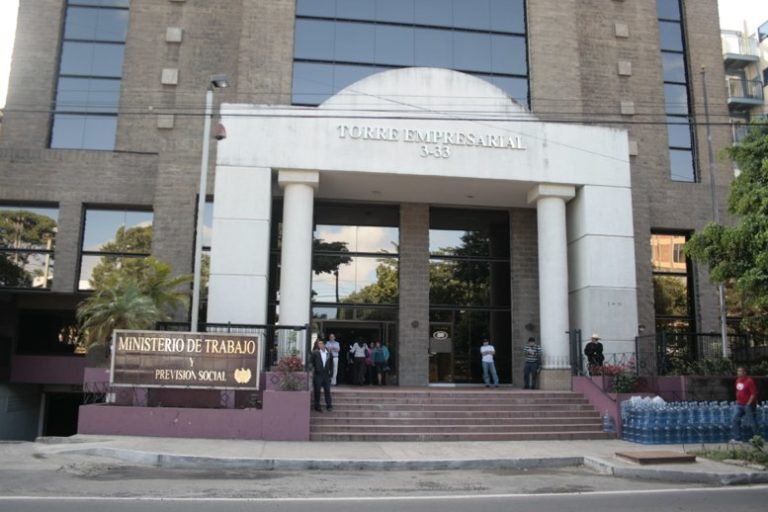
The General Labor Inspectorate from the Ministry of Labor and Social Welfare is the entity responsible for verifying compliance. Non-compliance may incur fines that range between Q1,000 and Q5,000 per affected worker, in addition to the obligation to pay the amount owed retroactively.
The Christmas bonus in Guatemala is a labor benefit. mandatory and universal, conceived to protect the well-being of workers and their families. Its correct application requires employers to be aware of the deadlines, calculation methods, and legal obligations that govern it.
En Conservis Lawyers We provide specialized consulting in Labor law and employer compliance, Including the calculation, documentation, and verification of the Christmas bonus payment, as well as in the prevention of legal contingencies before the Ministry of Labor.