
Table of Contents
Introduction
Labor rights in Guatemala are primarily guaranteed by the Political Constitution of the Republic (Articles 101 and 102) and the Labor Code (Decree 1441). These legal instruments aim to protect the dignity of the worker, establish fair working conditions, and promote job stability. Likewise, the State has the responsibility to ensure compliance with labor regulations and to sanction those who infringe upon workers' rights.
Legal framework
The Political Constitution of the Republic recognizes, among other aspects, the right to dignified work, equitable wages, and social security. These principles are implemented in the Labor Code, which details employment contract modalities, working hours, mandatory benefits, and grounds for termination of employment. Additionally, Decree 76-78 (Christmas Bonus Law) and Decree 42-92 (14th Month Bonus) establish additional employer obligations.
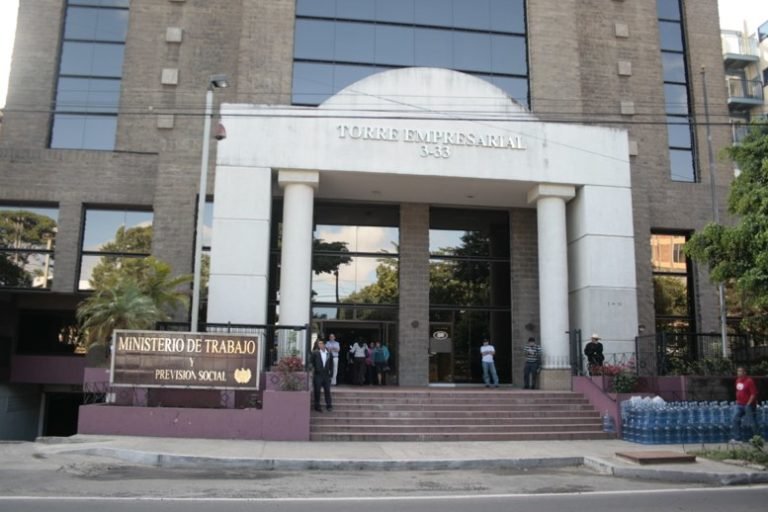
The Ministry of Labor and Social Welfare, along with the General Labor Inspectorate, oversees compliance with the law, handles worker complaints, and imposes sanctions when violations are detected.
Main rights recognized
Fair compensation
Guatemalan legislation guarantees workers the right to receive a dignified and sufficient salary (Article 102, letter b of the Constitution). There is a minimum wage established by the Government, which varies by economic activity and is reviewed periodically. The employer must pay the agreed-upon salary punctually and in full, in accordance with Article 90 of the Labor Code.
2. Workday and breaks
The law establishes a maximum daily workday of 8 hours and a weekly workday of 48 hours for day work (Article 116 of the Labor Code). For night and mixed shifts, different limits are contemplated (7 hours daily and 42 hours weekly for night work; 7.5 hours daily and 45 weekly for mixed shifts). Likewise, the worker is entitled to a minimum rest of 24 consecutive hours each week.
3. Holidays and Vacations
The Labor Code (Article 130) mandates a minimum of 15 working days of paid annual vacation after one year of continuous service. Additionally, there are national holidays established by law that workers must enjoy with pay, except for activities that cannot be interrupted due to their nature (in which case, if worked on a holiday, additional payment is due).
4. Aguinaldo and Bonus 14
The Christmas bonus (Decree 76-78) is equivalent to one ordinary monthly salary, which is paid in two installments (in December and the first half of January). The Bonus 14 (Decree 42-92) is paid during the month of July each year and is also equivalent to one ordinary monthly salary. Both are non-waivable rights and are mandatory for employers.
5. Social Security
The Guatemalan Social Security Institute (IGSS) provides coverage for cases of common illness, maternity, disability, and work accidents. The employer is obligated to register their workers and make the corresponding contributions, while the worker is responsible for contributing their proportional share.
6. Stability and protection against unfair dismissal
Guatemalan law protects workers against unjust dismissals. In the event of an unjustified dismissal, the employer must pay severance pay (Article 82 of the Labor Code), which corresponds to one month's salary for each year of continuous service or a proportional amount if the full year is not completed.
Employer Obligations
Employers are obligated to observe occupational health and safety regulations, to register their workers with the IGSS, to respect working hours, and to grant mandatory breaks. Additionally, they must maintain accurate payroll records and payments to ensure that wages, benefits, and contributions are paid on time and in full. Failure to comply with these obligations can lead to financial penalties and even criminal liability, depending on the severity of the infraction.
Protection and reporting organizations
The General Labor Inspectorate and the departmental offices of the Ministry of Labor and Social Welfare receive complaints of possible violations of labor laws. If there is no conciliation, the worker can go to labor tribunals to resolve the dispute. Additionally, the Human Rights Prosecutor's Office has the authority to intervene and recommend actions when fundamental rights are violated.
Challenges and Recommendations
Although Guatemala has a robust legal framework, labor informality and a lack of oversight in certain regions make it difficult to fully enforce labor rights. Therefore, it is essential for workers to be informed about their rights and report any irregularities. On the employers' side, it is advisable to keep meticulous records of their obligations, train human resources personnel, and, when in doubt, consult with legal advisors to ensure due compliance with the law.
Conclusion
Labor rights in Guatemala form the basis of a fair and dignified working relationship. National legislation protects workers in fundamental aspects such as remuneration, working hours, vacation, social security, and job stability. Knowing these regulations and demanding their enforcement fosters a more equitable and productive work environment. Likewise, respect for minimum rights positively impacts the quality of life of employees and contributes to social peace and the country's progress.