Legal information
for companies
Subscribe and receive legal articles and analyses aimed at entrepreneurs, partners and managers to anticipate risks and make better decisions in your company.
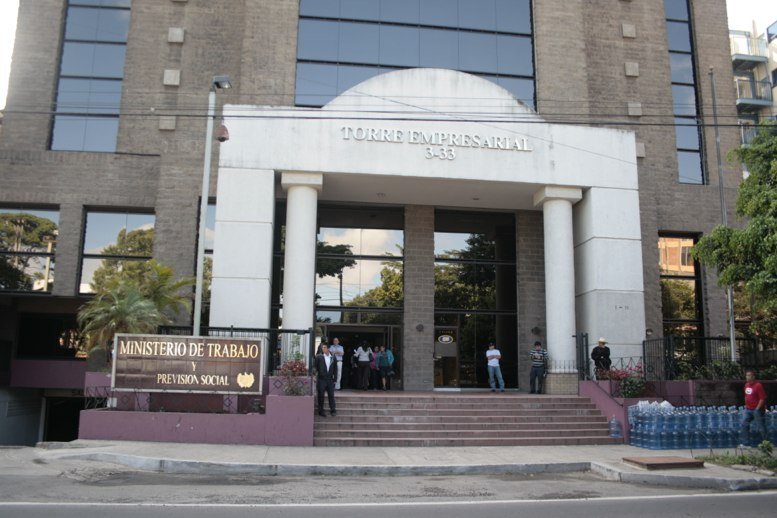
Receiving a summons from the General Labor Inspection does not automatically mean that the company has broken the law. However, it does require an immediate, orderly, and document-backed response.
These actions may originate from a claim by a worker or former worker, a complaint regarding potential labor non-compliance, an inspection promoted by the authority, or the need to review certain employer obligations.
Ignoring the summons, appearing unprepared, or presenting contradictory information can weaken the company's position and lead to additional contingencies.
Table of Contents
When the claim arises from a terminated employment relationship, it may include severance pay for time served, when legally applicable, as well as unpaid wages and employment benefits.
Among the concepts that can normally be discussed are:
The existence of a claim does not in itself prove that the employer owes the requested amounts. Each item must be evaluated based on how the employment relationship ended, the dates, the applicable salary, the payments made, and the available documentation.
The specific purpose of the proceeding must appear in the summons. Depending on the case, the action may seek to know the position of the parties, promote a conciliation, verify compliance with labor obligations, or request documents related to the company and the employment relationship.
The inspector can listen to the worker and the employer, review the documentation presented, and record the statements, agreements, requirements, or potential non-compliance detected.
The inspector does not act solely as a mediator. The General Labor Inspection also has powers of surveillance and verification of compliance with labor legislation. Therefore, a hearing that begins with an individual complaint may reveal documentary deficiencies or employer non-compliance other than the initial claim.
The documentation depends on the purpose of the subpoena, the nature of the claim, the size of the company, and the applicable obligations. Among the documents that may be relevant are:
Not all of these documents are necessarily requested at every hearing. The company must carefully review the subpoena and prepare only the pertinent information, without losing sight of other obligations that the authority may verify within its powers.
The Internal Work Regulations, for example, are mandatory for employers who permanently employ ten or more workers. The obligation to keep a payroll book also depends on the number of workers and the conditions established by legislation.
You can expand on these topics in our articles about the individual employment contract and the Internal Work Regulations.
Failure to appear at a summons, obstructing inspection work, failing to comply with a warning, or improperly proving employer obligations can lead to administrative sanction proceedings.
Fines do not have a single range applicable to all cases. Their amount depends on the infringed provision, the nature of the breach, and the corresponding grading rules. Some violations can reach up to eighteen current monthly minimum wages for non-agricultural activities.
This also does not mean that the penalty is automatic or inevitable. The authority must identify the violation, follow the applicable procedure, and allow the company to present documents, arguments, and means of defense.
Furthermore, paying a potential fine does not necessarily release the employer from correcting the non-compliance or from paying the corresponding labor benefits.
You can consult a broader analysis on sanctions by the General Labor Inspection in Guatemala.
Preparation should not begin on the day of the hearing. Upon receiving the summons, it is advisable to follow an orderly path:
The company must not improvise explanations, present incomplete documents as if they were final, or prepare retroactive records that do not reflect what actually happened. If a deficiency exists, the correct course of action is to evaluate it and determine how to legally remedy it.
Many companies review their contracts, files, and controls only after receiving a subpoena. That delayed reaction limits their defense options and can bring to light breaches that could have been corrected in a timely manner.
A preventive policy involves keeping contracts, files, payment receipts, vacation records, work schedules, regulations, and occupational health and safety documents up to date. It also requires establishing an internal procedure to handle inspections, complaints, and employment terminations.
The goal shouldn't just be to avoid a fine. An orderly labor structure makes it possible to demonstrate compliance, negotiate with better information, and make business decisions with less legal exposure.
A hearing before the General Labor Inspection may involve both an individual claim and the review of employer obligations. Therefore, the company must analyze the case, organize its documentation, and define its position before appearing.
Timely legal advice makes it possible to determine what amounts may be owed, identify potential contingencies, prepare documentation, and assess whether it is advisable to negotiate, remedy a breach, or mount a defense.
At Conservis Abogados we advise companies on the preparation and handling of citations, inspections, conciliations, and administrative labor procedures. Learn about our service of labor law for companies.
This content is for informational purposes and does not replace the legal analysis of a specific situation. Strategy and applicable obligations depend on the facts, documentation, and circumstances of each company.
Main regulatory source: Labor Code of Guatemala, Ministry of Labor and Social Welfare.